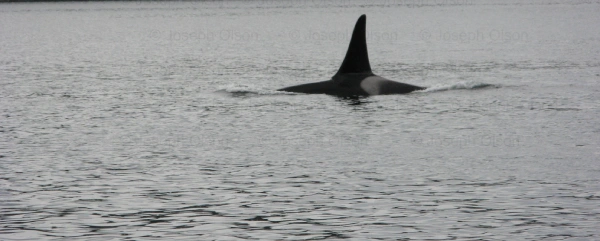
Tokitae was taken from her family in 1970.

BEFORE THE CAPTURE

Tokitae was the first human name given to her in 1970 by a veterinarian at the Miami Seaquarium after she was captured from the Salish Sea.

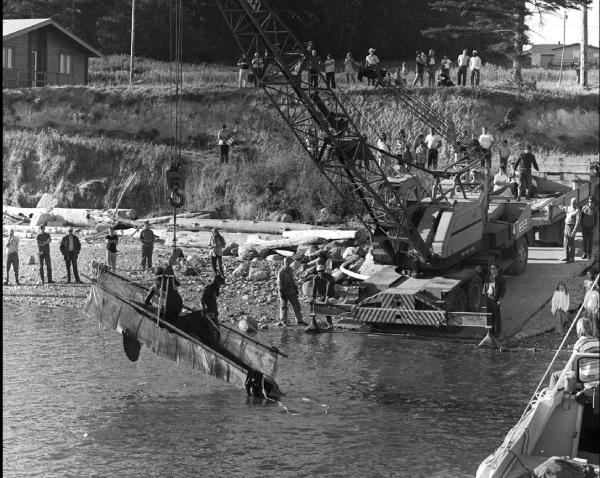
PENN COVE, 1970

In August 1970, capture teams entered Penn Cove.
Pods were surrounded, separated, and taken. Tokitae was among those taken away.

CAPTIVITY & COMMERCE

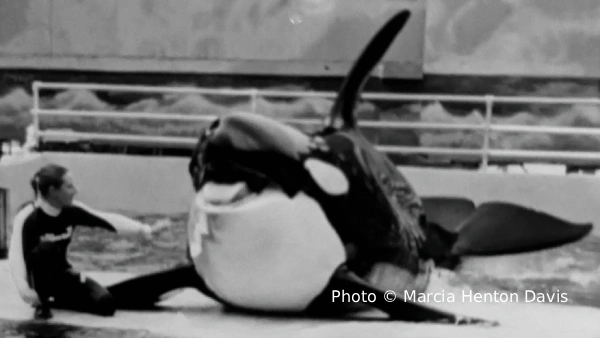
Toki was there for 53 years. She performed in a small tank, far from her home waters, drawing crowds and profit.

WITNESS & RESISTANCE

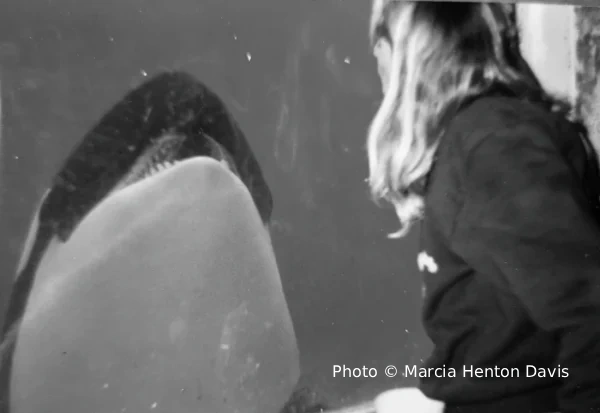
Marcia Henton Davis and many others bore witness and raised their voices-refusing to look away.
THE END

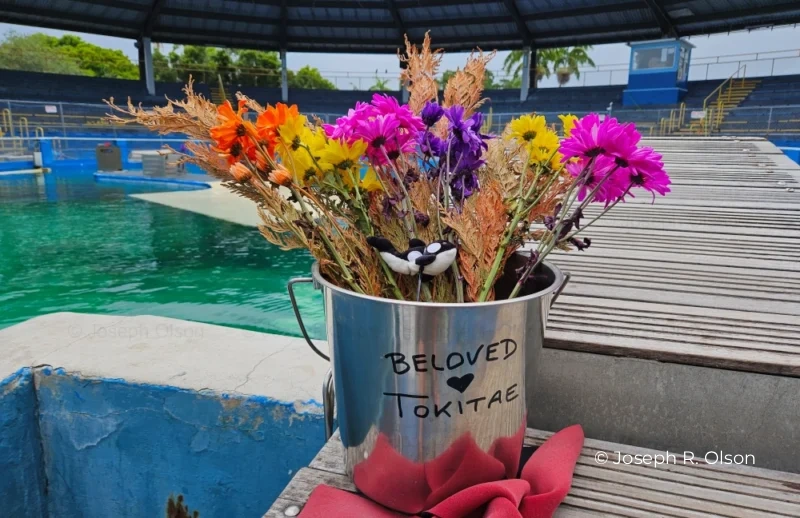
Tokitae died in captivity in 2023.
Her journey back never came.

WHAT WE ARE STILL LEARNING

Scientists now use real-time data to help predict whale
hostpots-warning ships to slow down and change course.
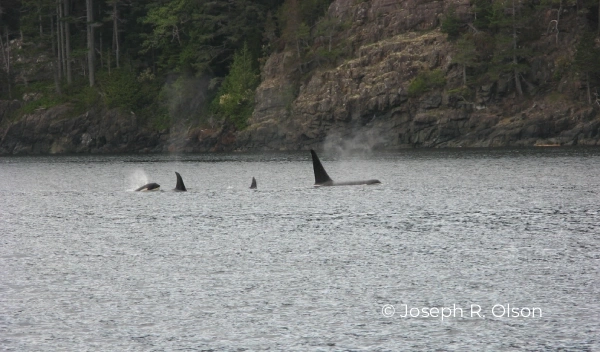
Marine ecosystems operate across decades. Orcas, for example, are long-lived mammals with complex matrilineal social structures. In some populations, females may live 70 years or more, and family groups remain stable across generations (Center for Whale Research; NOAA Fisheries). Recovery, decline, and adaptation occur on similar time scales.

Scientific understanding of these systems depends on long-term monitoring — not snapshots. Much of what we know about Southern Resident killer whales comes from sustained research programs tracking identified individuals over decades (CWR Annual Reports; NOAA Status Reviews).

Orcas are not only biologically distinct populations — they are culturally distinct.

Research beginning in the late 20th century demonstrated that different pods of killer whales possess stable vocal dialects. These dialects are learned, not genetically encoded, and are passed down matrilineally (Ford, 1991; Ford & Ellis, 2002). Calves acquire the specific call repertoire of their group and retain it throughout life.

In some regions, these dialects have remained stable for decades (Center for Whale Research).

Underwater sound is therefore not incidental to orca life. It is central to social cohesion, navigation, cooperative hunting, and calf learning. Increased vessel traffic and industrial activity raise ambient ocean noise levels. Studies have shown that elevated background noise can reduce communication range and interfere with echolocation — a phenomenon known as acoustic masking (Erbe et al., 2019; NOAA Fisheries). For species that rely on sound as primary sensory infrastructure, noise is functional interference.

Orcas occupy the top of marine food webs. As apex predators, they are particularly susceptible to bioaccumulation of persistent organic pollutants (POPs). Compounds such as PCBs move up the food chain and concentrate in long-lived marine mammals (Ross et al., 2000; NOAA Contaminant Reports).

Even decades after bans and restrictions, measurable residues remain in marine ecosystems At the same time, prey availability — particularly Chinook salmon in the Pacific Northwest — has declined due to altered river systems, overfishing, and climate variability (NOAA Fisheries; NMFS Recovery Plan). Research indicates that prey limitation remains one of the primary stressors affecting Southern Resident populations (NOAA 2022 Status Review).

None of these pressures operate independently. Climate change influences ocean temperature and prey distribution. Contaminants affect immune and reproductive health. Noise alters foraging efficiency.

Ecosystems respond to patterns, not isolated variables.

Long-term ecological research depends on stable institutions. Agencies such as NOAA and academic marine science programs provide longitudinal data necessary to detect slow-moving trends (National Academies of Sciences).

Scientific process is iterative. Findings are refined as data accumulates. Certainty is uncommon; accumulation of evidence is the norm.

Marine populations can recover under sustained protection (IWC Reports; NOAA Recovery Assessments). However, small populations remain vulnerable to compounding stressors. Even minor changes in calf survival or prey availability influence long-term viability (NMFS Population Viability Analyses).

Recovery is possible. It is rarely rapid.

BEYOND THE VISIBLE

Charismatic animals draw us in, but every species matters-
from the great to the unseen.

Toki — also known as Tokitae — was a Southern Resident orca whose life raised enduring questions about captivity, intelligence, and human responsibility. Taken from her family in 1970, she spent decades in confinement, becoming both a symbol of loss and a catalyst for deeper reflection about how humans relate to other living beings.

Beyond the Invisible is a written reflection that grew out of that realization — an invitation to slow down and pay attention to what cannot always be measured or easily explained, but still shapes how we understand care, ethics, and connection.

We pause here,
not to explain,
but to remember.

Some lives leave marks that don’t fade.
They change how we listen.
How we notice.
How we care for what was entrusted to us.

Toki was never just a whale.
She was presence.
Intelligence.
Relationship.

Her story asks something of us now —
not perfection,
not ownership,
but attention.

To the water.
To the sky above it.
To the responsibility we share.

This is a moment to stand still,
to look honestly,
and to choose how we carry what remains.

That choice is the story we tell next.

This reflection is part of an ongoing effort to honor Toki’s life and to think more carefully about how humans relate to orcas, marine life, and the natural world.

What We Are Still Learning

A Scientific Meditation on Water, Sound, and Continuity
Marine ecosystems operate across decades. Orcas, for example, are long-lived mammals with complex matrilineal social structures. In some populations, females may live 70 years or more, and family groups remain stable across generations (Center for Whale Research; NOAA Fisheries). Recovery, decline, and adaptation occur on similar time scales.

Scientific understanding of these systems depends on long-term monitoring — not snapshots. Much of what we know about Southern Resident killer whales comes from sustained research programs tracking identified individuals over decades (CWR Annual Reports; NOAA Status Reviews).

Orcas are not only biologically distinct populations — they are culturally distinct.

Research beginning in the late 20th century demonstrated that different pods of killer whales possess stable vocal dialects. These dialects are learned, not genetically encoded, and are passed down matrilineally (Ford, 1991; Ford & Ellis, 2002). Calves acquire the specific call repertoire of their group and retain it throughout life.

In some regions, these dialects have remained stable for decades (Center for Whale Research).

Underwater sound is therefore not incidental to orca life. It is central to social cohesion, navigation, cooperative hunting, and calf learning. Increased vessel traffic and industrial activity raise ambient ocean noise levels. Studies have shown that elevated background noise can reduce communication range and interfere with echolocation — a phenomenon known as acoustic masking (Erbe et al., 2019; NOAA Fisheries). For species that rely on sound as primary sensory infrastructure, noise is functional interference.

Orcas occupy the top of marine food webs. As apex predators, they are particularly susceptible to bioaccumulation of persistent organic pollutants (POPs). Compounds such as PCBs move up the food chain and concentrate in long-lived marine mammals (Ross et al., 2000; NOAA Contaminant Reports).

Even decades after bans and restrictions, measurable residues remain in marine ecosystems At the same time, prey availability — particularly Chinook salmon in the Pacific Northwest — has declined due to altered river systems, overfishing, and climate variability (NOAA Fisheries; NMFS Recovery Plan). Research indicates that prey limitation remains one of the primary stressors affecting Southern Resident populations (NOAA 2022 Status Review).

None of these pressures operate independently. Climate change influences ocean temperature and prey distribution. Contaminants affect immune and reproductive health. Noise alters foraging efficiency.

Ecosystems respond to patterns, not isolated variables.

Long-term ecological research depends on stable institutions. Agencies such as NOAA and academic marine science programs provide longitudinal data necessary to detect slow-moving trends (National Academies of Sciences).

Scientific process is iterative. Findings are refined as data accumulates. Certainty is uncommon; accumulation of evidence is the norm.

Marine populations can recover under sustained protection (IWC Reports; NOAA Recovery Assessments). However, small populations remain vulnerable to compounding stressors. Even minor changes in calf survival or prey availability influence long-term viability (NMFS Population Viability Analyses).

Recovery is possible. It is rarely rapid.