
Frequently Asked
Questions
Learn more about Tokitae (Lolita), Southern Resident orcas,
their connection to the Salish Sea, and the mission of Toki Spirit.
Tokitae — also known by her stage name Lolita — was a female orca (killer whale) who lived for over 50 years in captivity. Her story is both remarkable and tragic, and she became one of the most well-known symbols of the debate over keeping marine mammals in captivity.
Here’s a summary of her life:
Early Life and Capture
- Born: Around 1966, in the southern resident orca population off the coast of Washington State, in the Pacific Northwest.
- Pod: She was believed to be a member of the L Pod of the southern residents, possibly related to the matriarch known as Ocean Sun (L25).
- Capture: In August 1970, Tokitae was captured during a brutal roundup in Penn Cove, near Whidbey Island, where several orcas were driven into a cove and separated from their pods. Many died in the process.
Captivity at the Miami Seaquarium
- After her capture, she was sold to the Miami Seaquarium, where she was renamed Lolita for performances
- She lived in a tank measuring about 80 by 35 feet — widely criticized as one of the smallest for any captive orca in the world.
- She performed daily shows for over 50 years, one of the longest periods any orca has lived in captivity.
- For most of her life, she was kept without another orca companion after her tankmate Hugo died from a brain aneurysm in 1980.
Movement to Free Her
- For decades, animal rights advocates, scientists, and members of the Lummi Nation (who considered her family) campaigned for her retirement and possible relocation to a seaside sanctuary in her native waters.
- In 2022, ownership changes and pressure from activists led to discussions about her release plan.
- In early 2023, it was publicly announced that arrangements were being made to transport her back to Washington State to live out her days in a coastal sanctuary.
Death
- Before relocation could happen, Tokitae died on August 18, 2023, at about 57 years old.
- The cause of death was reported as renal failure.
- Her passing evoked widespread mourning worldwide — especially among Indigenous communities and animal welfare supporters, who saw her as a symbol of both human cruelty and endurance.
She continues to inspire creativity and actions for saving her family Tokitae’s life continues to inform discussions about orca intelligence, captivity, conservation, and human responsibility. Her story invites attention rather than certainty — and asks how care, ethics, and accountability shape our choices. She continues to inspire creativity and actions for saving her family
Tokitae is known by several names, each reflecting a different chapter of her life and the perspectives of those who named her.
Tokitae was the first human name given to her in 1970 by a veterinarian at the Miami Seaquarium after she was captured from the Salish Sea.
Lolita was the stage name used publicly during her decades in captivity — a name associated with performance and entertainment, though it was not used by those closest to her.
Sk’aliCh’elh’tenaut is the Lummi name given to her by the late Chief James of the Lummi Nation. The name translates roughly to “daughter of Sk’aliCh’elh,” honoring her lineage and her connection to the Southern Resident orcas and the ancestral waters of the Salish Sea.
And then there is the name we will never know — the name her mother gave her in the wild. That name still lives in the calls and memories of her family, echoing in the cold waters of her birthplace.
Each name tells part of her story: captivity, advocacy, cultural recognition, and belonging.
Southern Resident Orcas or SRO’s are considered the most researched group of orcas on the planet. Consisting of J, K and L pods, these orcas have all been designated numerical identification and names. They are called Southern Residents because it was thought that the Salish Sea is where they spent most of their time, however, studies show that there are trends in where they spend their time.They used to be seen frequently May through September, but now they are mostly absent from April through August. The Southern Resident Orcas were officially listed as endangered in November 2005.
The Salish Sea is a large, interconnected coastal marine ecosystem in the Pacific Northwest of North America.
In plain terms: it’s the network of inland waters between British Columbia (Canada) and Washington State (USA).
What it includes
The Salish Sea isn’t a single bay—it’s a system made up of:
- Puget Sound (Washington)
- Strait of Georgia (British Columbia)
- Strait of Juan de Fuca (between Vancouver Island and Washington)
Together, these waters connect to the Pacific Ocean and function as one ecological unit.
The Salish Sea is a network of coastal waters spanning Washington State and British Columbia. It is critical habitat for Southern Resident orcas and many other marine species.
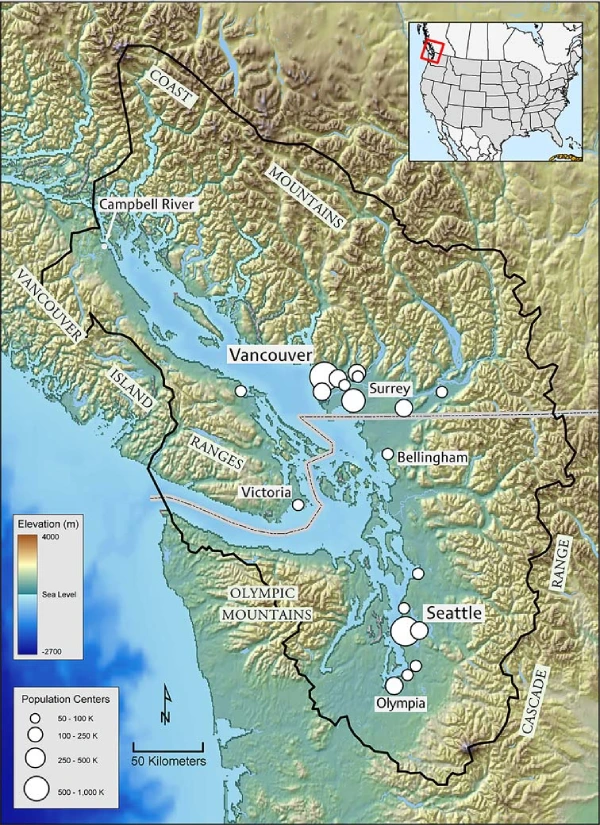
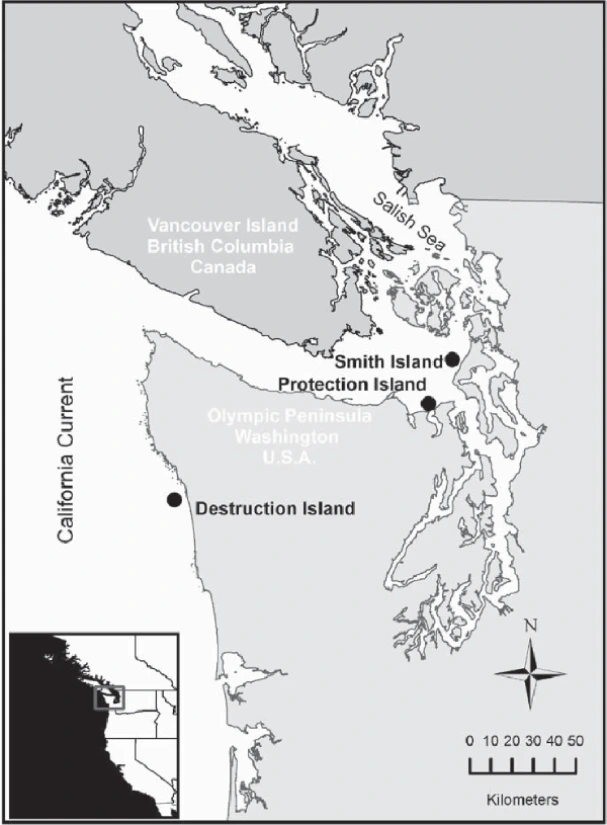
Tokitae — better known for most of her life as Lolita — was transported to the Miami Seaquarium in September 1970, shortly after her capture from Penn Cove in Washington state earlier that year. Specifically, she arrived at the Seaquarium and began living there on September 24, 1970.
During the infamous Penn Cove orca capture on August 8, 1970, over 80 wild orcas were herded into nets by captors to select animals for sale to marine parks — but only seven young orcas were ultimately taken into captivity, including Tokitae (Lolita). The rest were either released or escaped, and at least five orcas drowned in the nets during the operation.
Tokitae was transferred to Miami Seaquarium shortly after her capture in September of 1970.
Tokitae lived in a tank approximately 80 by 35 feet in size for 53 years, one of the smallest enclosures ever used to house an orca. In the wild, Southern Resident orcas may travel 50 to 100 miles per day within complex social and acoustic environments.
These conditions raised long-standing concerns about physical health, sensory deprivation, and psychological well-being. At the same time, caregivers described long-term bonds formed through daily interaction. Both realities are part of her story.
Yes — Tokitae (also known as Lolita) was widely regarded as the last Southern Resident orca in captivity until her death. She was a member of the endangered Southern Resident killer whale population captured from the wild in 1970 and lived at the Miami Seaquarium until she died on August 18, 2023. At the time of her death, she was the sole surviving captive orca taken from that population during the capture era of the 1960s and 1970s, as all the others had died earlier in captivity.
Plans to move Tokitae (also known as Lolita) to a sea sanctuary or her home waters began gaining formal, concrete momentum in the early 2020s, though advocacy for her release goes back much further:
Early Advocacy
1990s — The Tokitae Foundation (later Orca Conservancy) developed one of the first organized proposals (1996) to return her to a sea-pen environment in the Pacific Northwest. That plan involved training her into a sling and transporting her back to her native waters in a controlled sea-pen, with the eventual goal of release. However, this plan was never supported by the Miami Seaquarium at the time.
Formal Plans for Relocation
- December 2022 — Under new ownership, the Miami Seaquarium’s leadership publicly shifted its stance, expressing openness to relocating Tokitae after retiring her from performances and ceasing her public appearances.
- March 30, 2023 — A formal, legally binding agreement was announced between the Miami Seaquarium, Friends of Toki (formerly Friends of Lolita), and philanthropist Jim Irsay to move Tokitae to an ocean sanctuary in the Salish Sea (off the Pacific Northwest), where she would be cared for under protected conditions closer to her natal waters. This can be seen as the first official plan with support from both Seaquarium management and outside partners to relocate her.
In short: community and nonprofit advocacy dates back decades, but official sanctuary relocation plans involving the facility and major partners took concrete shape beginning in late 2022, with the key public announcement in March 2023.
1. They don’t know how to survive anymore
Most captive orcas were either born in captivity or taken very young. They’ve never learned how to:
- hunt live prey (they’re fed dead fish)
- navigate vast ocean territories
- avoid ships, fishing gear, or humans
Dropping them into the ocean would be like releasing a person who’s only ever lived indoors into the wilderness with no tools.
2. Orca culture is extremely specific
Orcas don’t just “join” other orcas.
- Pods have distinct languages (dialects)
- They have unique hunting techniques taught across generations
- Social bonds—especially with mothers—are lifelong
A captive orca often doesn’t belong to any existing pod, and wild pods usually won’t accept outsiders. Isolation = stress or death.
3. Physical and psychological damage
Life in tanks causes long-term harm:
- collapsed dorsal fins
- weakened muscles from limited space
- dental damage from chewing concrete/metal
- chronic stress and abnormal behaviors
These issues can make them slower, weaker, and less resilient in the wild.
4. Disease and genetic concerns
Captive orcas can carry pathogens not present in wild populations—or lack immunity to wild ones. Releasing them could:
- harm wild pods
- kill the released animal
- disrupt already fragile ecosystems
5. Humans = danger now
Captive orcas are trained to:
- approach boats
- respond to human cues
- rely on people for food
That makes them extremely vulnerable to ship strikes, fishing lines, or exploitation.
The concept of a sea sanctuary would be a netted sea enclosure, created for captive orcas or other once captive cetaceans to retire and live in as close to natural environments as possible while continuing to be taken care of by humans. Had Tokitae lived, she would have been moved to a state of the art enclosure or sanctuary in the Salish Sea and would have remained under human care. Keiko of the Free Willy fame who passed away in 2003 lived in a netted sea pen in Iceland from 1998 to 2002.
Depending on the sanctuary, it may:
- Protect coral reefs, kelp forests, mangroves, or deep-sea habitats
- Limit or ban fishing, drilling, mining, or dumping
- Regulate tourism and boating to avoid damage
- Support scientific research and education
Why sea sanctuaries matter
They help to:
- Preserve biodiversity
- Protect endangered species
- Allow fish populations to recover and spill over into nearby areas
- Keep oceans healthier and more resilient to climate change
Important nuance
Not all sea sanctuaries are the same:
- Some are no-take zones (nothing can be removed)
- Others allow limited, sustainable activities
- Rules vary by country and by site
Physical well-being
- Space to swim long distances (wild orcas can travel 50–100 miles a day)
- Clean, natural water with tides, depth, and temperature variation
- Good health care and freedom from chronic injuries, infections, or dental damage
- Natural movement, not repetitive circling or floating caused by confinement
Mental stimulation
- Choice and agency — the ability to decide where to go, what to explore, and when to rest
- Environmental complexity (currents, sounds, prey, textures)
- Avoidance of boredom and stress, which in captivity often show up as stereotypic behaviors or aggression
Social life
- Living with family members or a stable pod
- Lifelong social bonds — especially critical for females, who normally stay with their mothers for life
- Natural communication through their own dialects and calls
Natural behaviors
- Hunting or foraging behaviors, even if fish are provisioned
- Echolocation without acoustic distortion (concrete tanks reflect sound and can be painful)
- Resting in natural ways (like logging with podmates)
Emotional well-being
- Low levels of stress, fear, and frustration
- Ability to engage in curiosity, play, and social bonding
- Not being forced into performances or constant human interaction
Southern Resident orcas have one of the most stable and tightly bonded social systems known in any non-human animal. It’s deeply family-centered and largely matrilineal.
Here’s how it works
The basic building block: the matriline
- A matrilineis led by an older female (the matriarch)
- It includes:
- Her sons and daughters
- Her daughters’ offspring
- Both males and females stay with their mother for life
- Even adult males in their 30s–40s travel with mom
This lifelong bond is unusual among mammals and is a defining feature of Southern Residents.
Pods
- Several related matrilines form a pod
- Southern Residents historically had three pods:
- J Pod
- K Pod
- L Pod
- Pods travel, forage, and socialize together regularly but may split temporarily into smaller matrilineal groups
Each pod has:
- Its own vocal traditions
- Shared social history
- Preferred travel patterns
Acoustic clans
- All Southern Resident pods belong to a single acoustic clan
- They share a related set of calls and dialects, passed down culturally (not genetically)
- Dialects help orcas instantly identify:
- Family
- Pod
- Clan membership
Sound is basically their last name, accent, and family tree combined.
The role of matriarchs
Older females are crucial
- They lead group movements
- Share ecological knowledge (like where salmon will be during shortages)
- Their presence increases survival of adult offspring —especially sons
This is one reason menopause exists in orcas: post-reproductive females still dramatically boost family success.
What disruption looks like
Because bonds are lifelong:
- Removing one individual (especially a mother or calf) affects the entire matriline
- Separation can cause long-term stress, altered behavior, and loss of cultural knowledge
- This is why captures like Penn Cove were so devastating socially, not just numerically
AI, TV, Internet
Southern Resident orcas are very picky eaters—by or ca standards.
They eat fish only, and their diet is dominated by salmon, especially:
- Chinook (King) salmon← their absolute favorite
- Occasionally chum, pink, and sockeye salmon, depending on season and location
Why Chinook?
Chinook are:
- The largest salmon species
- High in fat and calories, which is perfect for big, energy-hungry orcas
- Available (or used to be) throughout much of the year in the Pacific Northwest
Southern Residents do not eat seals or other marine mammals—that’s a different orca ecotype (the “Bigg’s” or transient orcas).
This extreme specialization is also why they’re endangered:
when Chinook salmon runs decline, Southern Residents struggle to get enough food.Internet search/ Paul Clark/ A
Southern Resident orcas (the small, famous group that lives around the Pacific Northwest) are endangered mainly because their world has gotten a lot harder to survive in. Three big, connected reasons drive it:
Not enough food
Their favorite prey is Chinook salmon, which are also in serious trouble. Dams, habitat loss, over fishing, and climate change have slashed salmon numbers. When Chinook are scarce, orcas:
- Go hungry
- Have lower birth rates
- Lose calves more often
For Southern Residents especially, food scarcity is the #1 threat
Pollution builds up in their bodies
They’re long-lived top predators, so toxins like PCBs, pesticides, and flame retardants accumulate in their fat over time. These chemicals can:
- Weaken immune systems
- Disrupt hormones
- Reduce fertility
- Even worse, mothers pass some of this toxic load to calves through pregnancy and nursing.
Noise and disturbance from boats
These orcas rely on sound to hunt and communicate. Heavy vessel traffic (cargo ships, ferries, whale-watching boats) creates underwater noise that:
- Masks their echolocation
- Makes hunting harder
- Increases stress
On top of that, close boat traffic can physically disrupt feeding and resting.
Why Southern Residents are especially vulnerable
- They’re a small population(around 70–75 individuals)
- They’re diet specialists(mostly Chinook, unlike other orcas)
- They live in some of the busiest coastal watersin North America
So even small changes—fewer salmon one year, more noise, a toxic exposure—can have outsized impacts.
AI/Internet search/Paul
As of the most recent annual census (July 1, 2025)conducted by the Center for Whale Research, there are **about 74 Southern Resident killer whales (Orcinus orca) alive today across the three pods —J, K, and L—with roughly 27 in J Pod, 14–15 in K Pod, and 33 in L Pod
Southern Resident orcas depend heavily on Chinook salmon, which are big, fatty, and energy-rich. Dams on rivers like the Columbia and Snake interfere with salmon at multiple life stages:
- Block access to spawning grounds
- Kill or weaken juvenilesas they pass through turbines orreservoirs
- Slow river flow, making migration longer and more dangerous
- Warm the water, which stresses salmon and increases disease
Even with fish ladders, survival rates are much lower than in free-flowing rivers
Less salmon = hungry orcas
When Chinook numbers drop:
- Orcas must spend more time and energy hunting
- They burn stored fat, releasing toxins(PCBs, etc.) into their bloodstream
- Females are less likely to get pregnant
- Calves are more likely to be miscarried or die young
Internet search/ Paul Clark
Human-made noise from ships, sonar, and industrial activities creates “acoustic smog” that has devastating effects:
- Foraging Failure – Noise interferes with their echolocation (auditory masking), makingit nearly impossible to find prey. Researchers found that even quiet vessels like kayaks can reduce orca hunting time by roughly 20%
- Stress and Fatigue To be heard over the din, orcas must shout louder and use more energy, which can lead to chronic stress and physical exhaustion.
- Disruption of Life Activities Females with calves may entirely stop foraging in noisy areas to avoid wasting energy on unsuccessful hunts, which threatens the survival of the pod
Internet/General Scientific Knowledge/AL/Paul Clark
Marcia is a former whale trainer who worked closely with Tokitae and later became an advocate for orca welfare. Marcia has a zoological career spanning 25 years, having worked with many species including elephants, primates, cetaceans and currently volunteers at the Center for Great Apes in Florida with Orangutans and Chimpanzees.
All educational content is reviewed by a marine biologist and sourced from reputable scientific and regulatory references.
To respect creators, subjects, and legal requirements, and to maintain ethical storytelling standards. Scientific data needs to be backed up with previous research.
AI may be used to assist with organization and accessibility, but all factual content will be human-reviewed and scientifically verified.
Tokitae died on August 18, 2023, at approximately 57 years of age, before plans for relocation could be realized. Reported causes included complications following illness, commonly cited as renal failure