Requested file could not be found (error code 404). Verify the file URL specified in the shortcode.
Tokitae was captured in the waters of Penn Cove on Whidbey islandon August 8, 1970 -she was 4 years old. Her extended family of approximately 80 orcas were herded into a netted off section of the cove using speed boats, explosives and aircraft. Records indicate that 8 young orcas were captured that day and sold off tomarine parks, namely SeaWorld. One of those marine parks was Toki’s final destination -the Miami Seaquarium. There are anecdotal reports that several young orcas drowned in the nets that day and were hidden from view by sinking their bodies with rocks oranchors. These captures represent the very darkest days in the marine history of the Pacific Northwest and were the basis of extreme public outcry calling for the end of this practice, which finally happened in 1976.
Tokitae was then taken to the Seattle Marine Aquar-ium with several other young whales to await being shipped to marine parks including Sea World. This is where she was given the name “Tokitae” when chosen by the then veterinarian at Miami Seaquari-um, Dr. Jesse White.
She arrived at Miami Seaquarium on September 14, 1970 and was placed in the world’s smallest orca tank - the Whale Bowl. She joined the young orca, Hugo, also a captured Southern Resident, who was taken from Vaughn Bay in 1968. There was a lot of press at the time calling her “Lolita - Hugo’s bride.” Hugo and Tokitae were most likely either cousins or siblings, having been taken from the same pod - L pod. Hugo died 10 years later of a brain aneurysm after reportedly banging his head against the sides of the concrete. His body was removed via crane and he was taken by truck to the Miami landfill, there was very little mention of him after that. Tokitae was then alone until two Pacific Whitesided dolphins were brought in to share the pool with her.
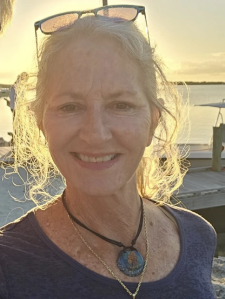
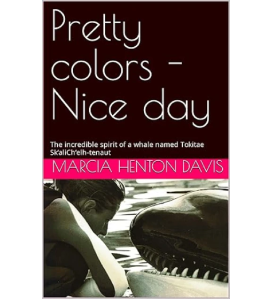
I met Toki in 1988, and at that time, she had been there for 18 years. Toki and I were about the same age, as her approximate birth year was 1965 and mine, 1964. When I first met her face to face, I felt a powerful connection to her, a feeling that I was sup-posed to be with her, I was supposed to take care of her and sup-port her.
I was hired at the park as a Flipper trainer, a silly show involv-ing 5 bottlenose dolphins called Flipper’s Beach Party. I remem-ber spending as much time as I possibly could at the whale area, helping, washing buckets, watching shows, then working with the dolphin(s) there...anything I could do to be helpful and noticed! Which paid off as not long after I started, an opening came up on the whale team and I was offered a position. I couldn’t believe I got to spend my days with this absolutely amazing marine mam-mal. She was very special to me.
Toki had a lot of trainers and pool mates come and go over the years and it seemed that the only constant was her. Through all of that change and loss, she was always resilient. What struck me the most is that despite her conditions, she seemed to have found a way to be positive, be joyful, foster relationships and be present. She had a wonderful sense of humor, she bonded with her caregivers and showed real affection. She loved to play and be given attention, it was clear to me that she knew she was the star of the show. When she did an athletic jump and splashed the children in the splash zone, she would watch their reaction and seemed to enjoy seeing them jumping with delight. She could feel their energy and I believe she knew she was deeply loved.

A debate began to rage in the late 80’s and 90’s about efforts to lib-erate her and bring her back to the Salish Sea where her family still swims. I was secretly all for hearing those plans, but in my position, I couldn’t pos-sibly let my feelings be known, I would have been fired im-mediately. I also knew that the Miami Seaquarium’s position was firm - they would never sell her or let her go. The basis for their position had some merits, some being that during her time in captivity, she had likely been exposed to various bacte-ria and viruses that could potentially sicken or kill her extend-ed family back in the cold waters around Puget Sound. Other arguments were that she had lost her natural instincts to hunt, communicate and survive on her own and it was unclear if her family would even recognize her after so many years. I agreed then that simply freeing her into the sea was irresponsible and it would put her at great risk. An option I heard a few times was to create a pen or enclosure in a protective cove but I never saw any actual places or plans for that.
The debate raged on for over a decade with animal rights groups protesting nearly every weekend out in the parking lot and requesting meetings with the owners of the Seaquarium. The answer from the then owner Arthur Hertz of Wometco Enter-prises was a deafening no every time and eventually, their re-quests were basically ignored. The protests continued, Toki kept doing shows and I even-tually left the park when a management change made it impossible for me to continue there. I was basically forced out. It broke my heart to leave her.

Then one day, the Lummi Nation of Washington State became involved in around 2018 when a totem pole was traveled from Washington state to Florida to raise awareness about Tokitae. The Lummi’s position was that they considered Tokitae their “relative beneath the waves” and they wanted their relative back where she belonged. The effort began to pick up steam when a collaboration between the Lummi Nation, the founders of the Whale Sanctuary Project, and a wealthy benefactor - Pritham Singh began. A group called “Friends of Toki - originally Friends of Lolita” was formed (of which I became a part in April of 2023) and a plan to increase Toki’s water, food, care and eventually to create a sanctuary began in earnest. The plan grew wings when a billionaire football team owner and philanthropist, Jim Irsay announced his pledge to finance the entire project from her daily care, transport and sea pen enclosure construc-tion, to her long term care at the planned sanctuary at Cypress Island in the Salish Sea.
Tokitae had always been a very healthy whale as long as I knew her and according to her records which I read through before my time with her, she had not been sick at all other than menses symptoms. This was the case until a lung infection that occurred in 2022 had caused her to become quite ill, nearly losing her life. She was tended to by Miami Seaquarium vets as well as a team of outside vets, who put her on a very specialized anti-biotic drug that was sourced from Japan. Right around this time, she was “retired” from performing and re-moved from all guest viewing.

Everything seemed to be on track until the day in mid August when Tokitae suddenly refused food was a shock to all of us. Toki had always had a very good appetite and we had recently increased her food quality - the salmon and herring she was being given was high restaurant quality. Her tragic death only 2 days later was absolutely devastating and completely unexpected. Tokitae should have gone to her sanctuary and I should have been by her side. I believed 100% that it was her destiny to go back to her home waters, after everything she had been through, she deserved to live in peace in the waters where she was born.

Whidbey Island Parks are located within the Salish Sea in Island County, Washington.